

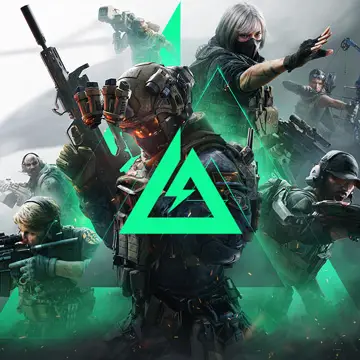
As a tactical shooting game that has grown extremely rapidly in recent years, Operation Delta's economic system "Triangle Coin" has become one of the core resources for players to improve their combat experience. With the emergence of different channels, "triangle coin price difference" has also become one of the most searched questions by players. Many people will wonder: Why are the prices of the same triangular coins so different on different platforms? How to choose?
This article will conduct an in-depth analysis from three dimensions: price structure, channel differences, and actual selection strategies.
1. Why are the prices of triangular coins not uniform?
The price of triangular coins is not a fixed global unified price, but is determined by multiple factors:
1. Regional pricing mechanism
Different servers (such as American servers, Asian servers, etc.) have pricing systems based on local consumption levels, so there are natural differences.
2. Impact of exchange rate fluctuations
When cross-regional players pay in different currencies, they will be affected by exchange rate changes, such as conversions between US dollars, Hong Kong dollars, and RMB.
3. Channel cost structure
Official channels usually include platform fees, while third-party channels may reduce costs by optimizing bulk purchases.
4. Activities and Gift Pack Mechanism
Limited-time events and seasonal gift packs often significantly lower the “actual unit price”.
2. Comparison of mainstream triangular currency price channels
Currently, players mainly obtain triangular coins in three ways:
● official channels
Features:
price stability
Highest security
No additional risk
shortcoming:
almost no discount
less flexible
● Third-party recharge platform
Features:
Discounts may exist
Various payment methods
Support cross-region
shortcoming:
Platform quality varies
Need to screen for reliable sources
● Automatic direct charging system (current mainstream trend)
Features:
Direct recharge with ID, no password required
Automatically credited (usually 1–10 minutes)
Support players from multiple regions
This method is becoming the mainstream choice for international players.
3. The real logic of price comparison
When many players search for "triangle coin price", they only focus on "who is cheaper", but in fact the real price should be broken down into: Actual cost = bid price + risk cost + time cost
For example:
Low price but delayed arrival → high time cost
Requires manual processing→increased risk costs
Official high price but stable → lowest risk
Therefore, the price cannot just look at the numbers, but the overall experience.
4. How to choose the optimal price strategy?
A rational player will usually follow the following strategy:
1. Prioritize security
Whether an account password is required is the first criterion.
2. Check the account speed again
Whether to support automatic payment system.
3. Finally compare prices
Compare prices on the premise that safety and speed are satisfied.
4. Focus on long-term costs
Frequent delays or failures can increase hidden costs.
5. Why are automation platforms becoming more and more popular?
With the globalization of the player base, recharge needs have also changed:
Players are distributed across regions
Payment methods are complicated
Higher efficiency requirements
Therefore, automated systems have gradually become mainstream, such as some platforms that support direct ID charging (such as 94LIVES mode ), favored by users for the following reasons:
No password required, more secure
The system automatically processes orders
Strong cross-region compatibility
Transparent and stable price structure
This model essentially turns “recharge” into a standardized service process.
6. Personal opinion: Prices are losing absolute dominance
In the past, when players chose a recharge platform, price was the first factor. But now the trend is changing:
Players pay more attention to stability
Pay more attention to the speed of payment
Pay more attention to safety
In the future, the core of competition will shift from "who is cheaper" to "who is more reliable."
7. Summary
about Triangle coin price , which can be summarized as:
The price is determined by region, exchange rate and channel.
The difference between different channels is essentially a difference in service
Security and speed are more important than low price
Automated direct charging is becoming the mainstream of the industry
For most players, choosing a stable and automated recharge platform is more reasonable than simply pursuing the lowest price. For example, the service structure of 94LIVES model is more in line with the current needs of global players.



RM 5020, 5/F, YAU LEE CENTRE, NO.45, HOI YUEN ROAD, KWUN TONG, HONG KONG